
Denver’s housing market is undergoing a rapid and dramatic shift as inventory levels have surged to almost double the long-term average for April, marking what an analyst calls an “unprecedented” correction in one of the nation’s most expensive noncoastal metro areas.
“What’s going on in Denver’s housing market right now is unprecedented,” Nick Gerli, CEO of Reventure App, wrote on X, formerly Twitter, on May 7. “Inventory just shot up to 99.6 percent above the long-term average for April.”
At the end of March, about 10,000 houses and attached residences were listed for sale across the 11-county metro area, according to a report from the Denver Metro Association of Realtors (DMAR). The figure represents a significant increase from the previous April, when fewer than 6,000 homes were available.
Why It Matters
The current downturn contrasts sharply with the boom that Denver experienced during the pandemic. During that time, housing demand surged as remote work and low mortgage rates drove many to purchase homes across the country, including in Denver. However, as mortgage rates surged as a result of the Federal Reserve’s aggressive rate-hiking campaign of 2022 and affordability plummeted, the market began to cool.
Now, Denver’s market correction is unfolding as a surplus of homes continues to outstrip buyer demand. Sellers are increasingly forced to lower asking prices to attract buyers, resulting in price cuts across the metro area. Analysts say that if inventory levels remain high, price declines could accelerate.
What To Know
“Denver’s housing inventory has skyrocketed by 64.9 percent over the last year, and is now sitting at its highest level going back to at least 2017,” Gerli told Newsweek.
“This spike is unprecedented because no other large metro area in America has experienced such a massive spike in inventory compared to long-run norms,” he added.
According to the real estate analyst, Denver had a total inventory of 10,345 homes for sale in April, 99.6 percent higher than the long-run average for April of 5,181 listings. “For comparison—the second closest large market (min 1-million population) in terms of excess inventory is Austin at 73.9 percent,” Gerli said.
This boom in inventory can be traced back to two factors: reduced demand and an increase in seller listings.
“Demand has been down in Denver now for the last two years due to high prices and rates, with sales volume about 15 percent below the seasonal norms,” Gerli said.
“At the same time, sellers are now listings houses at the highest rate in almost 10 years. The reason sellers are listing could be due an increase in outbound migration and slowing economic growth, as well as the mortgage lock-in effect easing.”
Home values in the city are already showing signs of decline, dropping by 0.1 percent over the past year, with March seeing a 0.58 percent decrease. The value drops were most pronounced in Denver County, Arapahoe County and Jefferson County, where prices fell between 0.59 percent and 0.67 percent, according to Gerli.


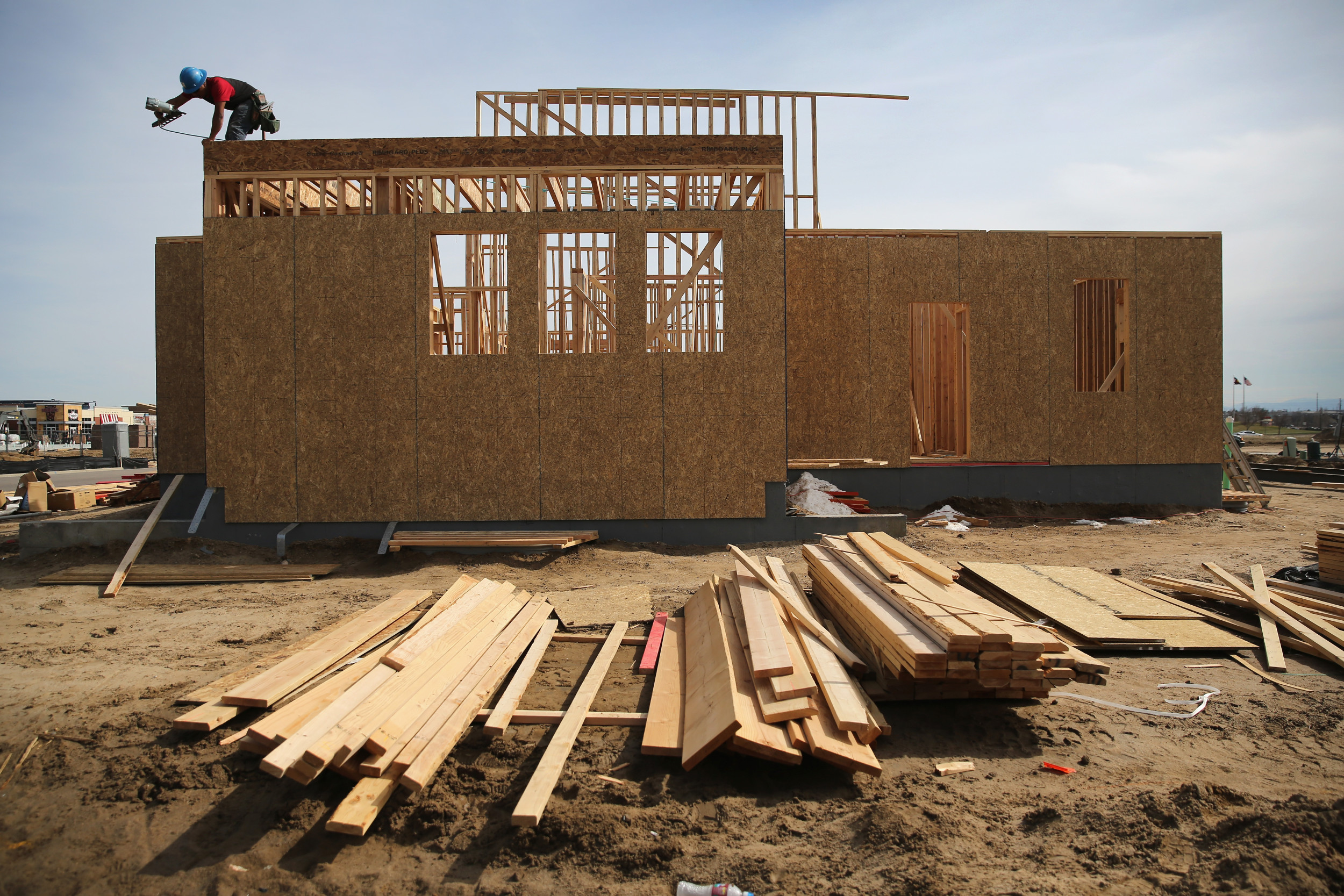
A man works on a housing construction site on May 3, 2013, in Denver.
John Moore/Getty Images
The dramatic increase in housing inventory is primarily driven by two factors, Gerli said: constrained buyer demand and a flood of new listings from sellers.
The typical home price in Denver stands at $593,000, a figure that may place immense financial strain on local buyers. With a median monthly mortgage, tax and insurance payment of $3,700—accounting for 42 percent of the median income, well above the long-term average of 29 percent—the affordability gap has become a major barrier to homeownership, Gerli said.
The city has become so expensive in part because of wealthy Californians moving to Colorado, the analyst explained. “Denver received a lot of California transplant buyers over the last 10+ years, with many of these buyers selling their houses in California and buying houses in Denver, driving up prices,” he said.
“Moreover, Denver’s economy was one of the best performing in the U.S. in the run-up to the pandemic, with a vibrant tech scene and significant job growth, which laid a solid foundation price appreciation.”
But many locals are now priced out of the Denver housing market. According to Reventure data, sales activity is now 15 percent below the long-term average and down 30 percent from the peak of the pandemic. That is why inventory levels are rising so sharply.
Reventure’s Home Price Forecast Score for Denver now stands at 26 out of 100, the lowest among major U.S. metros, Gerli said, suggesting the city is vulnerable to further price corrections.
The ranking reflects not only the excess inventory but also the limited buying power of residents amid ongoing affordability challenges.
“We’ve had price stagnation,” Amanda Snitker, the market trends committee chair for DMAR, told Denverite in April. “So we haven’t seen a drastic price reduction, necessarily, but we haven’t seen prices grow.”
The typical home in Denver remains costly, with a single-family home reaching a median of $660,000. Many of the homes on the market have been sitting idle for extended periods before going under contract, remaining for a median of 18 days in March—a significant increase from the rapid sales during the pandemic boom.
Sales have dropped to just over 4,000 per month, Denverite reported, compared to almost 6,000 per month pre-pandemic.
Newsweek contacted DMAR and Colorado Realtors for comment by email on Tuesday morning.
What People Are Saying
Nick Gerli wrote on X in April: “I think a couple of things are going on in Denver. One is that the market’s job growth and migration have really slowed. So there is structurally less homebuyer demand. As well as less renter demand. Secondly, the mortgage lock-in effect is now beginning to ease, which is propelling a massive backlog of new listings to the market.”
Hannah Jones, senior economic research analyst at Realtor.com, told Newsweek last month: “The steady decline in home prices and climb in inventory suggests that Denver’s market is returning to balance. There were 8,500 on the market in March, the highest March level in the data’s history (back to mid-2016).
“Though inventory has built up, prices are still elevated, especially on a price-per-square-foot basis, suggesting that buyers are waiting to see prices fall further before getting into the market.”
What Happens Next
If the current inventory surge continues, Denver homeowners could face further declines in property values throughout 2025. Gerli’s Reventure forecasts a 9.1 percent drop in home values over the next 12 months if the ongoing trends continue.
This might be bad news for homeowners, but great news for aspiring homebuyers who have been priced out of the market in recent years.
“If homebuyers were to come back into the market and sales were to increase, that could stem the tide of inventory and stabilize prices. However, I don’t anticipate this to happen with Denver’s housing market being so expensive,” Gerli told Newsweek.
“The typical mortgage payment for new buyers across the metro is nearly $3,693/month, which is 41.5 percent of the area’s median monthly income. Many buyers simply cannot qualify for mortgages in Denver’s market at today’s prices and rates.”
link