

The 29 European countries implementing the Entry-Exit System are: Austria, Belgium, Bulgaria, Croatia, the Czech Republic, Denmark, Estonia, Finland, France, Germany, Greece, Hungary, Iceland, Italy, Latvia, Liechtenstein, Lithuania, Luxembourg, Malta, Netherlands, Norway, Poland, Portugal, Romania, Slovakia, Slovenia, Spain, Sweden, and Switzerland • Cyprus and Ireland will not implement the EES and will continue to stamp passports manually.
The EU’s long-delayed digital border control system will come into force this Sunday, 12 October, requiring nationals of all countries from outside the Schengen Area to register and provide biometric data at the border upon arrival.
The Entry-Exit System (EES), which had been due to launch last November, will be rolled out gradually across 29 European countries over the next six months, with different elements of the system introduced in phases. This includes the collection of biometric data, such as facial image scans and fingerprints, which, according to the official EES website, “might not be collected at every border crossing point right away”.
During the rollout period, which continues through to 9 April 2026, passports will continue be stamped upon arrival in the Schengen Area. The EES is expected to be fully operational from 10 April 2026 and will then replace passport stamping, promising to streamline EU border checks and improve security.
In addition to biometric data, the EES will record passport details, including a traveller’s full name, date of birth, the date and place of each entry and exit, and information about any refused entries, all stored in a central database.
EES will enable close monitoring of how long travellers spend in the Schengen Area. Travellers – and travel managers –should be aware that visa-exempt visitors are limited to a maximum of 90 days in the region within any 180-day period.
“Corporates are underestimating the impact of the digitisation of the borders with a shared agreement across countries,” warns Samantha McKnight, senior vice president of client solutions at immigration specialist CIBTvisas.
“It’s going to be far easier to track day counts. As soon as a traveller swipes through that electronic gate, border security will know if they’re on day 91 and can refuse entry.
“Most companies don’t have a robust way of tracking day counts, and people always forget that [the 90-day limit] includes their personal travel,” adds McKnight.
Travel managers might now have to account for and track employees’ personal travel to the Schengen area
Shane Downey, vice president, government relations at the Global Business Travel Association (GBTA) therefore warns that travel managers might now “have to account for and track employees’ personal travel to the Schengen area”.
Similarly, Julia Lo Bue-Said, CEO of UK-based TMC consortium Advantage Travel Partnership, said corporates should plan trips carefully to avoid overstays. “This will mean monitoring employee travel schedules carefully in order to prevent costly penalties, whilst adapting booking processes to navigate the new border requirements,” she said.
The EES is the precursor to the EU’s European Travel Information and Authorisation System (ETIAS), which is expected to become operational in late 2026 and, similar to the UK’s recently introduced ETA scheme and the long-established ESTA in the US, will require visa-exempt, non-EU nationals to obtain an online authorisation before entering the bloc. But the EES and ETIAS are two separate systems.
“We’re going to watch and see how well the staggered rollout of the EES works and that will give us a sense of which countries will best manage the ETIAS rollout, because the EU is moving at the speed of the slowest country,” says McKnight.
In Italy, for example, the EES will be implemented at Rome Fiumicino and Milano Malpensa airports, as well as at maritime ports in Civitavecchia and Genoa this Sunday, with expansion to additional border points from 20 October. In Germany, only Düsseldorf airport will have the EES operational from 12 October and only once implementation is deemed “successful” will the system then be introduced at airports in Frankfurt and Munich, followed by other airports.
In Spain, initial EES implementation efforts will focus on air hubs, with a first test of the system set to take place at Madrid-Barajas-Adolfo Suárez airport this Sunday. Subsequent phases will include implementation at land borders, followed by sea borders.
It’s precisely this phased approach that has allayed prior concerns regarding the system’s lack of readiness and seemingly quelled fears of long queues at UK ports and rail terminals, where travellers crossing over into the EU will need to register biometric data prior to departure. The gradual rollout could also buy time for corporate travel managers to implement systems to track employees’ business and leisure trips into the Schengen area.
According to the EU regulation behind the EES, only 10 per cent of border crossings need to be recorded in the system within the first 30 days of implementation. At the 90-day mark, this increases to 35 per cent with biometric functionalities installed at half of a country’s border crossing points. By day 150, biometric checks are to be installed at all borders with 50 per cent of non-EU travellers checked through the system and at day 170, the system should be fully implemented with all non-EU nationals checked at all entry and exit points.
BT4Europe, the association representing 12 national travel buyer associations, described the EES as “a real step forward” with “a pragmatic rollout to April 2026”.
“Crucially, a safety-valve mechanism will allow authorities to ease controls if queues build up, and we urge them to apply this with common sense to prevent unnecessary delays,” said BT4Europe treasurer and managing director of the Netherlands Association for Travel Management (NATM), Odete Pimenta da Silva.
“If you only need to check ‘up to’ 10 per cent [of non-EU travellers] in the first 30 days there should be no queues,” she added.
We encourage all travellers to allocate additional time for security and to verify that all of their information is readily available prior to departure
Similarly, UK operators at the Channel Tunnel and London St Pancras station – where Eurostar services connect the UK to continental Europe – believe they are ready for the EES.
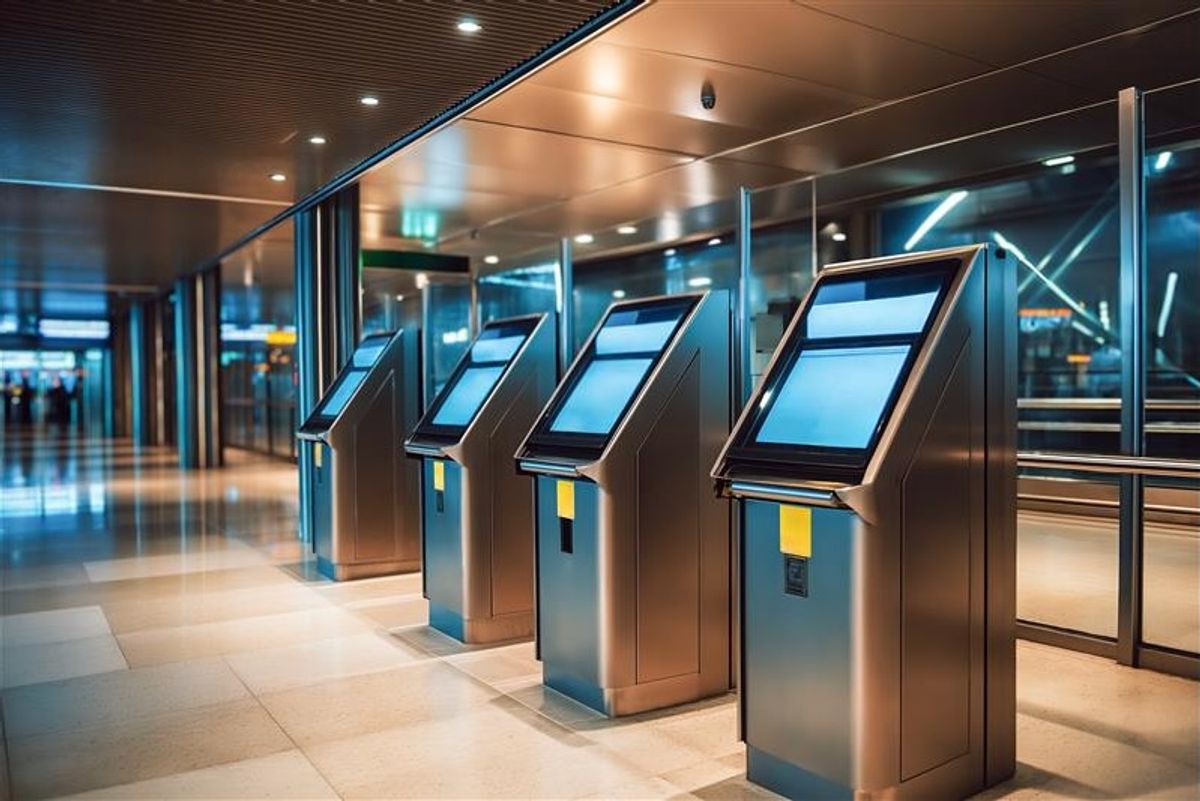
A Eurostar spokesperson said the company is “fully prepared” for the EES, with 49 dedicated kiosks and “specially trained” staff at London’s St. Pancras International station.
“Over the past two years we have extensively modelled and analysed what is needed to ensure a smooth journey for customers. This means that check-in times will remain the same for Eurostar customers with the extra EES processing being integrated into existing check-in times,” they said in an email to BTN Europe.
The spokesperson stated that the EES will be introduced in stages across Eurostar services. From 12 October, business travellers – or those travelling in Premier class – and Étoile loyalty programme members will be “invited” to try the system.
“This would be randomised on the day and as such isn’t mandatory,” the spokesperson explained. This will change in January, however, “when biometric testing will properly begin with passengers,” they added.
A recent report in The Times also raised concerns surrounding a set of questions that that travellers will be required to answer about their accommodation and whether they have evidence of sufficient funds for the trip, which risk causing delays.
However, the Eurostar spokesperson told BTN Europe such questions “have been removed from the process while we are going through the phased [implementation]. This will be reviewed in the next six months,” they said.
Additionally, Eurotunnel CEO Yann Leriche stressed “there will be no chaos” at its terminals in Folkestone and Calais, according to a BBC report. At its Calais terminal, biometric data will be collected by “facilitation agents” equipped with tablets, while more than 200 kiosks installed at Folkestone will collect biometric data prior to border control.
Nevertheless, Advantage’s Lo Bue-Said is advising travellers “to be vigilant in advance of their trips and to come prepared in order to mitigate potential complications during their international journeys. We encourage all travellers to allocate additional time for security and to verify that all of their information is readily available prior to departure,” she said.
BT4Europe’s Pimenta da Silva added that the EES “is just one piece of a bigger puzzle” and stressed the EU “must apply technology consistently to make travel faster, cheaper and more competitive.”
link