

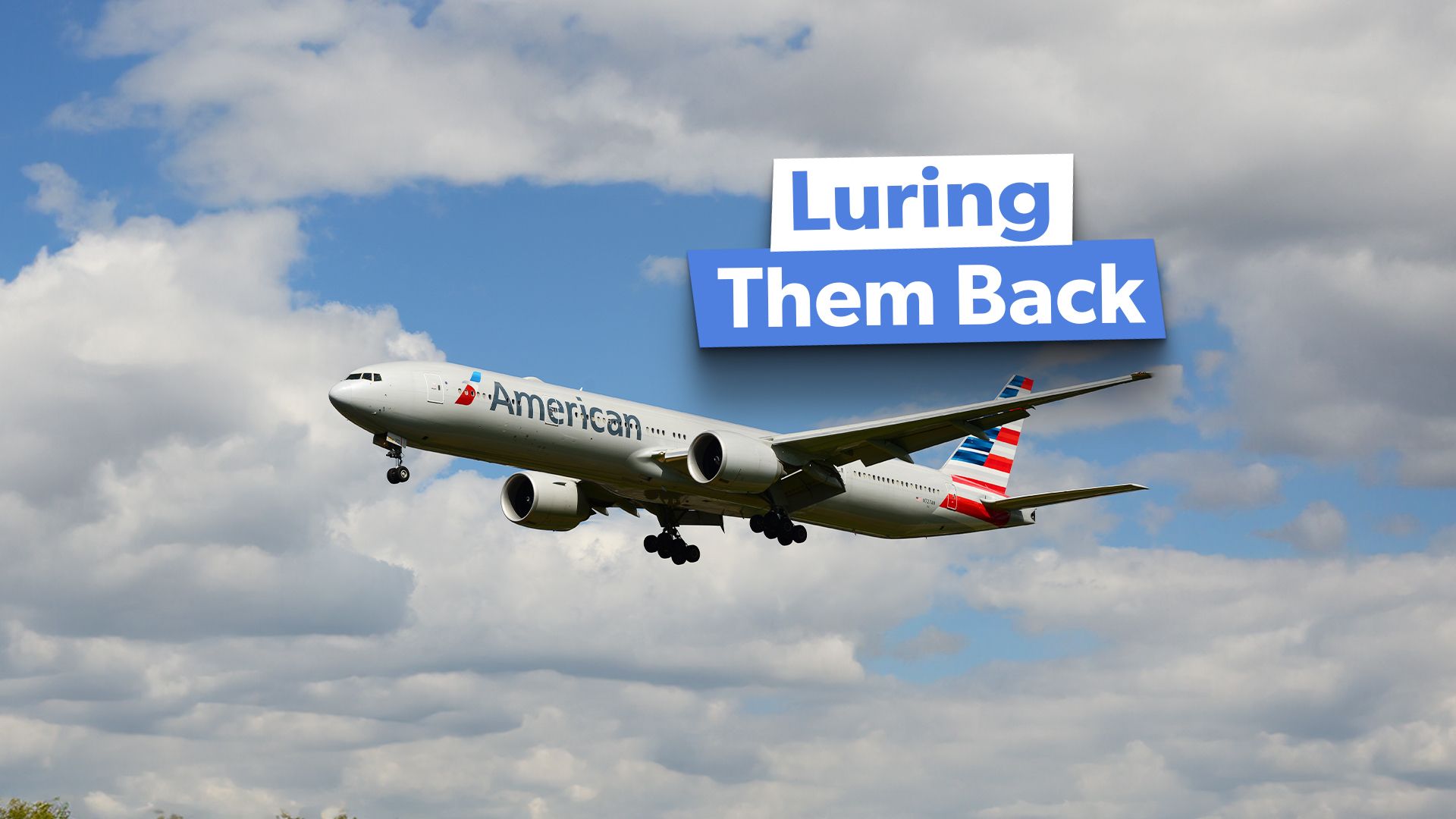
Business travelers value flight schedules, airport services, cabin treatment, and frequent flyer programs, making them essential for major U.S. and global airlines. Due to this, business travelers often pay three or four times more than leisure travelers. To attract and retain these high-value customers, airlines have adjusted their fleet, schedules, seating, airport space, management, and strategies.

This article explores the steps taken by American Airlines after losing out on almost $1.5 billion in revenue last year due to an unsuccessful attempt to change the way it competes for business travel.
The significance of business travelers
Business travelers contribute significantly to airline revenue by using frequent flyer and other incentive programs, as well as by purchasing extra services. However, the majority of that 60% of passenger consumer revenue comes from business travelers, who make up a far larger percentage of the total than those who fly for leisure or enjoyment.
Although they make up 12% of all airline passengers, business travelers are usually twice as profitable as other passengers and purchase more costly seats and last-minute tickets. Business travelers actually account for 75% of an airline’s earnings on some flights. Every year, Americans take over 405 million business trips.

Airlines are working to seize the business travel market. Companies such as Southwest, which are renowned for their budget travel and low fares, have also been focusing on business travelers.

They have been striving to improve their business travel segment since 2021. Southwest has upgraded the booking process by introducing dedicated portals that make the process more convenient and seamless.
American Airlines lost business travelers for these reasons:
Technology
American Express Global Business Travel vice-president of distribution and strategic sourcing John Bukowski expressed concerns about rushing the New Distribution Channel’s introduction. This confirmed that the new systems were not fully operational. This impacted business travelers.
Relationship with agencies
Relationships between the agencies were not the best, mainly due to the preferred agency programs utilized and also American’s New Distribution Capability fares account for at least 30% of the travel agency’s reservations.
Loyalty points
American made it more difficult for passengers who booked indirectly to accumulate loyalty points. Bain’s research revealed that this turned off far too many of those clients.
Traveler preferences
Traditional booking methods continue to be preferred by a substantial number of business travelers. American has already reversed the withdrawal of at least 40% of its fares from the traditional EDIFACT distribution channel, which travel management companies and online booking tools use. This pertains to specific issues.
Route focus
Routes to major business centers are struggling, while routes to popular vacation destinations are doing well.

The airline has signed new contracts with business travel agencies, modified the travel agreements of its largest corporate clients, and relaunched its Corporate Experience program earlier this month in an effort to make amends.

This program provides corporate travelers with priority seating and re-booking in the event of flight delays. American has recovered to 7% below its business travel business levels in the third quarter, according to CEO Robert Isom.
Here are some key initiatives:
- Enhanced Business Class Experience: American is currently in the process of upgrading its premium cabins to enhance the level of comfort and amenities they offer. This encompasses enhanced in-flight services, new seats, and enhanced meal options to accommodate the requirements of business travelers.
- Expanded Flight Options and Flexibility: The airline is expanding the number of business-friendly flight options, particularly for routes that experience high corporate demand. Additionally, it provides more accommodating cancelation and booking policies, which are essential for business travelers who frequently need to modify their itineraries.
- Loyalty Program Improvements: American Airlines is emphasizing its AAdvantage loyalty program to increase its appeal to business travelers. This will be achieved by providing enhanced benefits, simplified upgrades, and increased opportunities to earn miles through business-related activities.
- Focus on Airport Services: In order to accommodate business travelers who prioritize convenience and efficiency, the airline is enhancing the overall airport experience, which includes priority boarding, improved lounge access, and faster security screening.
- Technology and Connectivity: American Airlines is investing in enhanced in-flight Wi-Fi and technology to guarantee that business travelers remain productive and connected during their flights.
- Partnerships with Corporations: Additionally, American is collaborating with corporate clients to provide personalized travel solutions, including dedicated account managers, negotiated fares, and other services that are tailored to the unique requirements of businesses.
Overview of the business travel program offered by American Airlines

For every $1 spent on eligible travel with American, passengers can accumulate one mile for their businesses. Specialized platforms enable travelers to manage their travel, report incidents and customize key elements of their trips. Travelers can utilize miles to offset business travel expenses, including flights, upgrades, rental cars, and hotels.

Registered travelers earn additional loyalty points on business travel. Additionally, they can effortlessly transition between business and personal travel on aa.com or the American app. It is also possible for travelers to book their trips anywhere and accumulate additional Loyalty Points for eligible business travel with Americans.

More benefits are available with the World Elite Mastercard, which is offered in partnership with Citibank. This enables travelers to convert business purchases into AAdvantage® miles that can be redeemed for future business travel and other benefits.
The biggest challenges for business travel

To attract and retain business travelers, each major airline in the United States prioritizes key elements such as their fleet, schedule, seating configuration, airport real estate, organizational management, distribution strategy, corporate policies, and nearly all other aspects of its operations. However, post-pandemic there was a significant decline in business travel. Key factors impacting overall business travel include:
- Corporations have realized they can operate effectively with fewer flights. Despite increased leisure travel, airlines struggle to offset revenue losses caused by reduced business travel. Airlines are adapting by bundling business and leisure travel options and offering premium experiences to leisure customers. Some airline CEOs continue to maintain the belief that business traffic has not significantly changed and that it is simply a matter of time before things return to their previous state.
- While video platforms like Zoom, Teams, and WebEx are not ideal substitutes for in-person meetings, they have gained widespread acceptance, reducing the need for some business travel.
- Aviation, though a small contributor to global emissions, faces scrutiny due to its transparency. ‘Flight shaming’ occurred, particularly in Europe prior to the onset of the pandemic. This may prove to be the most substantial hazard to the complete resumption of airline business travel. Reducing air travel is a straightforward way for companies to cut emissions, as exemplified by Bain’s ESG initiative to reduce emissions from air travel by 35%.
- Certain organizations have developed favorable perspectives regarding the prospect of long-term remote employment. Some individuals are still grappling with this issue. However, its impact on airline business travel is tangible, as travel is fundamentally about interacting with others. In the absence of these individuals, travel is rendered impossible. The societal perception of frequent business travel has changed, with road-warrior lifestyles now viewed as wasteful and socially undesirable. Alternative, sustainable transportation methods are increasingly embraced.

It is crucial to bear in mind that even a minor decrease in historical business travel, in the range of 10%-15%, has significant repercussions for the largest U.S. carriers such as American Airlines.
How to boost business travel
It is essential to take into account the key recommendations of McKinsey when developing strategies to increase corporate sales. These critical suggestions underscore prevalent deficiencies in the current models of business travel. The key elements are:

- Corporate travel should be data-driven, using internal and external data sources to give commercial staff the visibility they need to make informed decisions and track their results.
- Discounting heavily to boost sales has risks. Some carriers initially gave all customers the same discount, with only minor variations based on corporate account size.
- Airlines can protect their margins by tailoring discounts and other benefits to each corporate client’s travel needs and habits. American Airlines tailors its business travel program and aims to cater to all companies, regardless of size or staff.
- Despite its simplicity, many airlines believe corporate sales should be done by experienced salespeople in key markets. Network, customer experience, revenue management, marketing, distribution, and sales functions on such carriers usually work independently with little company-wide coordination. Corporate sales silos worsen the situation for many carriers.
Business travel recovery

Despite accounting for only 12% of air traffic before the COVID-19 pandemic, corporate trips made up 50% of US airline profitability. Most experts expect business travel to recover slower than leisure or family trips. Overall, business travel’s recovery faces challenges from technological, environmental, and cultural changes, signaling a potential long-term shift in the airline industry.
As many expect corporate travel to disappear, competition in this lucrative segment is expected to increase. Many airlines treat corporate sales as a “black box” despite their profitability. They are managed artistically rather than scientifically.
The profitability of airlines has been and will remain contingent upon corporate sales. American Airlines is positioning itself to capture a greater portion of this critical segment by avoiding the pitfalls and implementing dynamic changes. They have geared up with a new action plan to ‘lure them back’ in.
link