

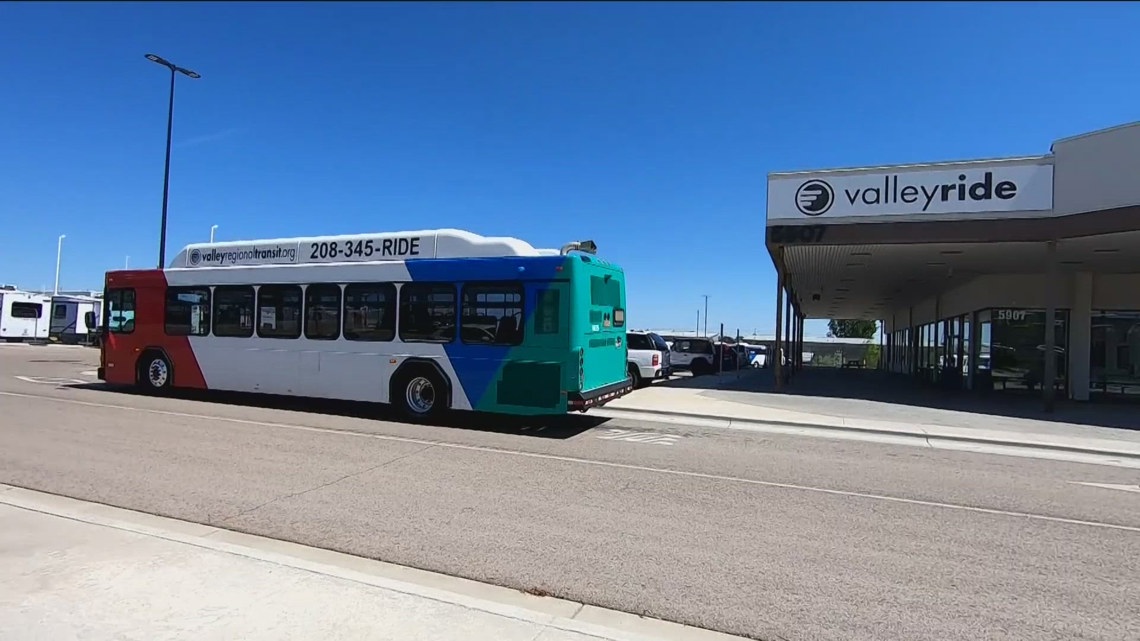
A Nampa councilman questions the value of bus service after witnessing low ridership. Transit users and officials debate if cuts would harm vulnerable residents.
NAMPA, Idaho — Nampa city leaders are considering cuts to public transportation services, pointing to low ridership on Nampa bus routes.
Councilman Sebastian Griffin, who recently spent five weeks commuting from Nampa to Boise on the bus for law school, questioned the necessity of maintaining fixed routes with few passengers.
“It’s me and one other individual from Nampa getting off at the same spot, and then one person going to Caldwell,” he told KTVB. “If there’s not the demand, if there’s not the need, and we can’t fund it properly, we’re not utilizing the resource to the extent that we should be.”
Nampa currently pays almost $800,000 annually for a combination of three fixed routes and on-demand service, while Boise invests millions in nearly 20 routes.
Griffin argues that Nampa faces difficult budget decisions.
“We’re in a pinch. If I want to spend a million dollars, do I want to spend it on the two to three people riding that bus in the morning, or to add two or three more officers to make sure Nampa stays safe?” he said.
Valley Regional Transit (VRT) has presented the city with four options: maintain service, increase service, decrease service, or eliminate service. They seek public input from Canyon County residents at open houses on Tuesday, May 6, from 3 p.m. to 7 p.m. at the Nampa Library and the Happy Day Transit Center in Caldwell.
VRT CEO Elaine Clegg said that low ridership may stem from insufficient service rather than a lack of demand.
“Ridership may be low because it’s just not attractive today,” she said. “Increasing means it’s more convenient, it comes more often, it’s easier to use.”
Clegg warned that cuts would impact Nampa residents and people from surrounding communities.
“It hurts the people in Nampa who are using them today to access jobs, access services, access cultural opportunities,” Clegg said. “It will also mean that people from Caldwell won’t be able to get to Nampa for jobs.”
Nampa resident Alfredo Yanes described the bus service as “a blessing” that connects him to family.
“My whole family depends on it,” Yanes said. “If I wasn’t able to commute anymore on the bus, I wouldn’t be able to see my daughter.”
Brandon Tafoya, who relies on the bus at least four times weekly to attend College of Western Idaho classes, said the service is essential.
“Right now, I don’t have a car, and this is my main way of getting to my classes,” Tafoya said. “There’s some people like me who sometimes just have to ride the bus, whether that’s for going to school or going to work.”
Clegg said if Nampa cuts services, VRT will continue to serve CWI because it is one of VRT’s contributors.
“While we will still serve the College of Western Idaho under these scenarios, it will mean that Nampa residents will have less access to the college than they do today,” Clegg said.
Councilmember Griffin favors cuts that would leave service to just on-demand, which he believes better serves residents’ needs.
“The 150 (on demand) is a good option because it’s picking people up where they need to be, to take them where they need to go,” Griffin said.
link