


Salesforce may not be the only company working on a travel
program chatbot. The potential for an all-knowing “travel bot” to take some
mental load off the always-extended resources of the corporate travel program
has been an enticing prospect for a few years now. Most efforts, to date, have
been more programmatic in that they have been built to understand a variety of
ways a question could be asked and, then, to deliver a certain defined answer.
Large language models have changed that equation
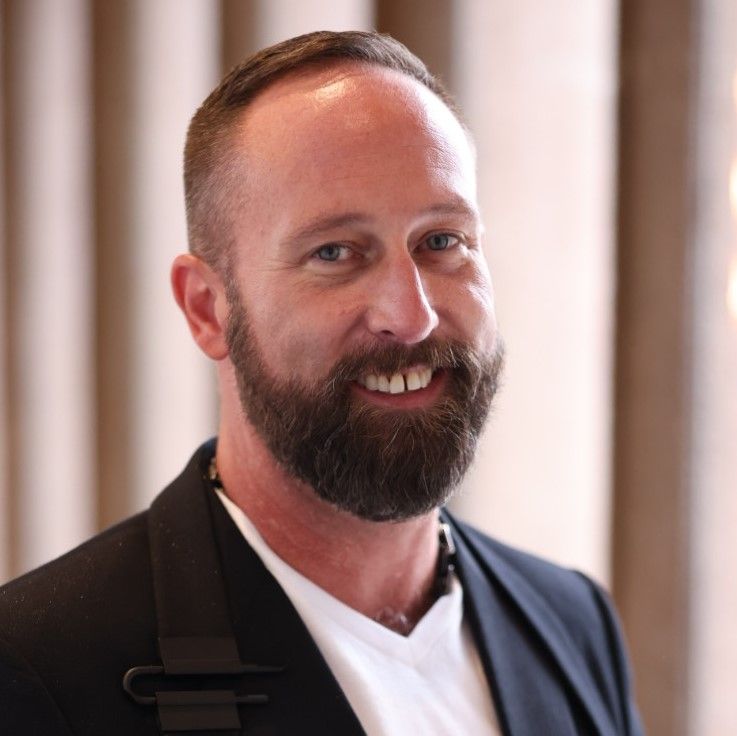
dramatically. Salesforce senior travel manager for North America and JAPAC Ryan
Pierce has leaned way into the possibilities.
The First Operational Model
Responding to rising demand in real-time support across global
teams, Pierce envisioned an AI assistant delivered via Slack collaboration
channels that would respond accurately and effectively to policy, process and
overall queries about the Salesforce travel program. Salesforce acquired
enterprise collaboration technology Slack in 2021, and the Salesforce workforce
engages via Slack channels extensively. It was, therefore, the natural channel through
which to deliver a travel program chatbot; plus, the Salesforce business technology
team already had some “AI agent” templates running that could jump start the
process.
But templates do not guarantee successful outcomes.
“There are foundational templates, if you will, that are out
there to kind of get you started, but based on what you need to do, you train
the AI to work with the different nuances you need,” said Pierce.
For travel, that meant identifying the right sources of
content to inform the bot and weighting the value of those sources so the bot
could prioritize the ones the Salesforce travel team know are the most accurate
and up to date.
“That took a lot of validation work,” said Pierce. “We have a
grading process for the answers the bot is giving—is it right; is it partially
right?”
Because the chat bot is designed to surfaced its sources,
the travel team can address inaccuracies or clarity issues at the source level
and not by “programming” correct answers. With generative AI, synthesizing the
answer to any given travel question—not just pre-set questions devised by the
travel team—is the job of the bot.
Those sources could include official travel team resources,
previous Slack-based advice or notices offered by the travel team in the
channel, but also advice from other participants in the channel who may be experienced
travelers but not an official travel voice.
“The process evolved into scoring travel team sources at a
higher level than other people’s responses who are participating in the channel
and may be right or wrong,” said Pierce.
Pierce’s scoring mechanisms and feedback loops for training
AI for travel have set forth a replicable model for Salesforce peers to emulate,
and they are ongoing. He also has ensured privacy, put up guardrails to keep
the AI on track and set clear expectations around its capabilities. The chatbot
currently answers hundreds of inquiries on a weekly basis—and that’s just tip
of the iceberg at about 30 percent of total inquiries. Importantly, when it
cannot answer a question, it responds that it is unable to answer.
Salesforce senior director of global travel wrote in his
nomination for Pierce that the company would like to see queries receiving
correct answers rise to 75 percent by the end of the year.
“Its ability to instantly reply—with contextual accuracy and
confidence—has transformed Slack from a passive chat space into a dynamic
support layer powered by digital intelligence,” he wrote. “This isn’t just automation—it’s an entirely
new way to operate.”
The Future Vision
Pierce’s larger vision includes an agentic AI future. That’s
the framework in which he has built the initial chatbot—and in which he
continues to interface with Salesforce’s business technology team to understand
how generative AI innovations like the travel chatbot eventually will interact
with one another to cascade information into actions.
“Taking actions based on what is asked is really the next
step,” he said. “To do that, we need to enable multiple agents, entrusted with
specific activities, to ‘talk’ with one another to drive workflows.”
He described a world in which a query in the Salesforce
chatbot channel would connect with the user’s data and perhaps bounce off to an
AI-powered agent at a travel management company or supplier and trigger other
actions. “That’s definitely a future state, but we are having those
conversations with our suppliers and service providers and laying the
groundwork now.”
link